

Man Mo Temple: Where Literature Meets Martial Valor
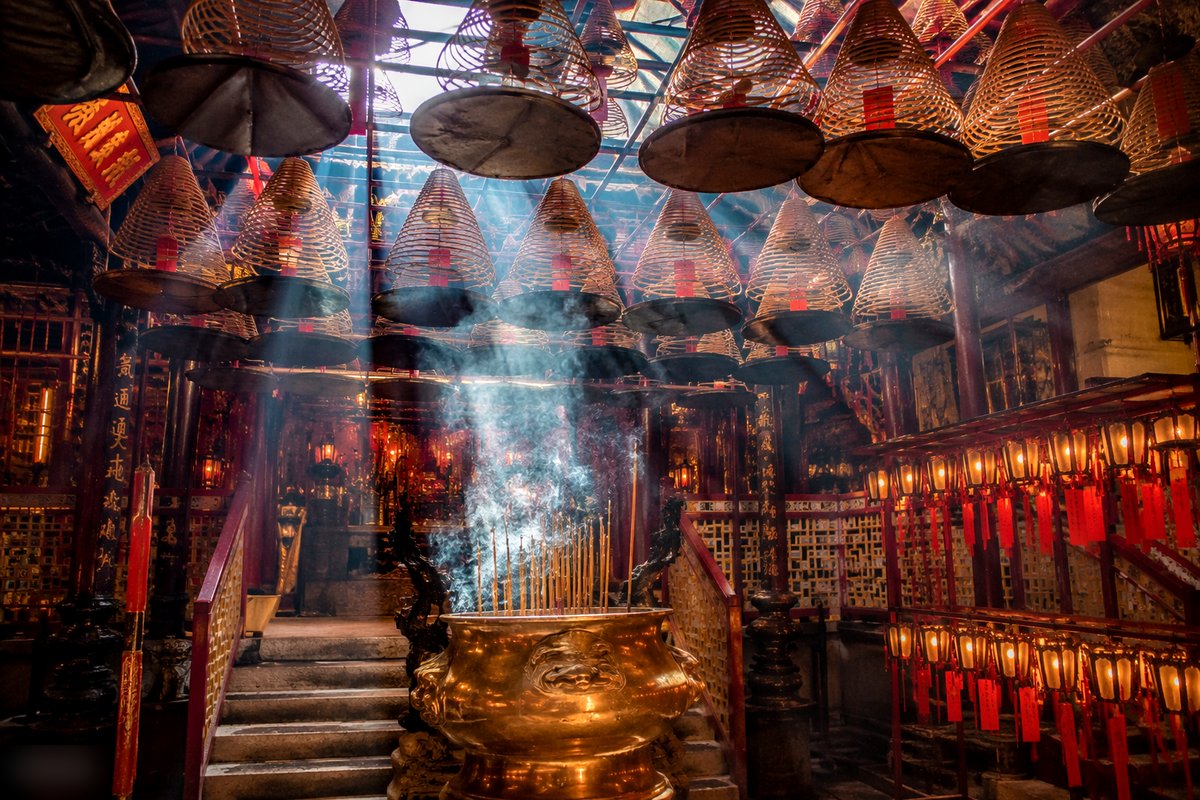
Wander down Hollywood Road in Central, past the antique shops and the constant buzz of the city, and you'll suddenly feel the energy shift. The air grows thick with fragrant smoke, light falls in golden shafts through the doorway, and time seems to slow down. That's when you know you've arrived at Man Mo Temple, one of Hong Kong's oldest and most atmospheric temples, and one of my favourite places to bring visitors.
The God of Literature Meets the God of War
Built in the mid-19th century, this Grade I Historic Building honours two Taoist deities: Man Cheong, the God of Literature, and Kwan Tai, the God of War. Together they represent the perfect balance of wisdom and strength, a combination that guided scholars, students and merchants for generations. During the Ming and Qing dynasties, students came here to pray for success in the imperial examinations. Some still do before big exams today.
Hong Kong's Oldest Courthouse
Here's what most guidebooks skip: Man Mo was far more than a temple. In its assembly hall, the Kung Sor, it served as an informal court where the Chinese community settled disputes by traditional law. Illiterate workers brought letters to be written or read aloud. And in the early 1900s, many locals genuinely preferred this temple justice to the British colonial courts. Promises were written on yellow paper, sealed with the blood of a sacrificed chicken, and burned before the gods. Breaking such an oath was believed to invite divine punishment: a remarkably effective legal system, if you think about it.
Inside: Coils, Lanterns and Ten Judges
The moment you cross the threshold, you're wrapped in a sweet haze of incense. Giant spiral coils hang from the ceiling, some burning for up to a month, each one carrying the prayers of the person who purchased it, red wish-cards fluttering below. Look closer and you'll find the Ten Judges of the Underworld watching sternly from the altar, antique sedan chairs once used to carry the deities in processions, and beautiful brass altar pieces brought from Guangdong over 150 years ago. At the fortune-telling station, temple keepers still practise the traditional bamboo oracle ritual: shake the container until one stick falls out, and your fortune is revealed.
Three Halls, One Community
What many visitors don't realise: Man Mo is actually a complex of three connected halls: the main temple, the Lit Shing Kung honouring all heavenly gods, and the Kung Sor assembly hall. Together they show how deeply religion, community life and governance were intertwined in old Hong Kong. Don't rush: the side shrines of Kwan Yin, the Goddess of Mercy, and Tin Hau, protector of fishermen, are quiet gems.
· Come early in the morning, when sunlight filters through the incense smoke — pure magic for photos.
· Entry is free; a small donation for incense is appreciated.
· Combine with the antique shops on Hollywood Road and nearby Tai Kwun for the perfect Central morning.
· Be respectful: this is a living place of worship, not a photo studio.
Why It Still Matters
Amid the glass towers of modern Central, Man Mo Temple is a reminder of Hong Kong's deeper roots: a place where justice, learning, faith and community once walked hand in hand. Whether you come to light incense, seek a fortune, or simply soak in the atmosphere, it offers something rare: a genuine connection to the soul of old Hong Kong. And if you'd like me to show you around in person, I'd be honoured.