

Temples and the Giant Buddha on Lantau
The moment the cable car glides over the ridge and the mountains of Lantau Island open up below you, something changes. The noise of Hong Kong fades. Mist drifts between the peaks. And suddenly you understand why monks chose this island, centuries ago, as their place of meditation.
From a Straw Hut to Po Lin Monastery
The story begins in 1906, when three monks from Jiangsu arrived at the Ngong Ping plateau. Their first "monastery" was nothing more than a straw hut, which they simply called the "Great Hut." By 1924, under Abbot Ji Xiu, it had grown into the Po Lin Monastery, the "Precious Lotus." Today it's a living temple: incense curls into the mountain air, monks chant in the halls, and visitors step into a rhythm of devotion that has continued for over a century.
How the Big Buddha Got Up the Mountain
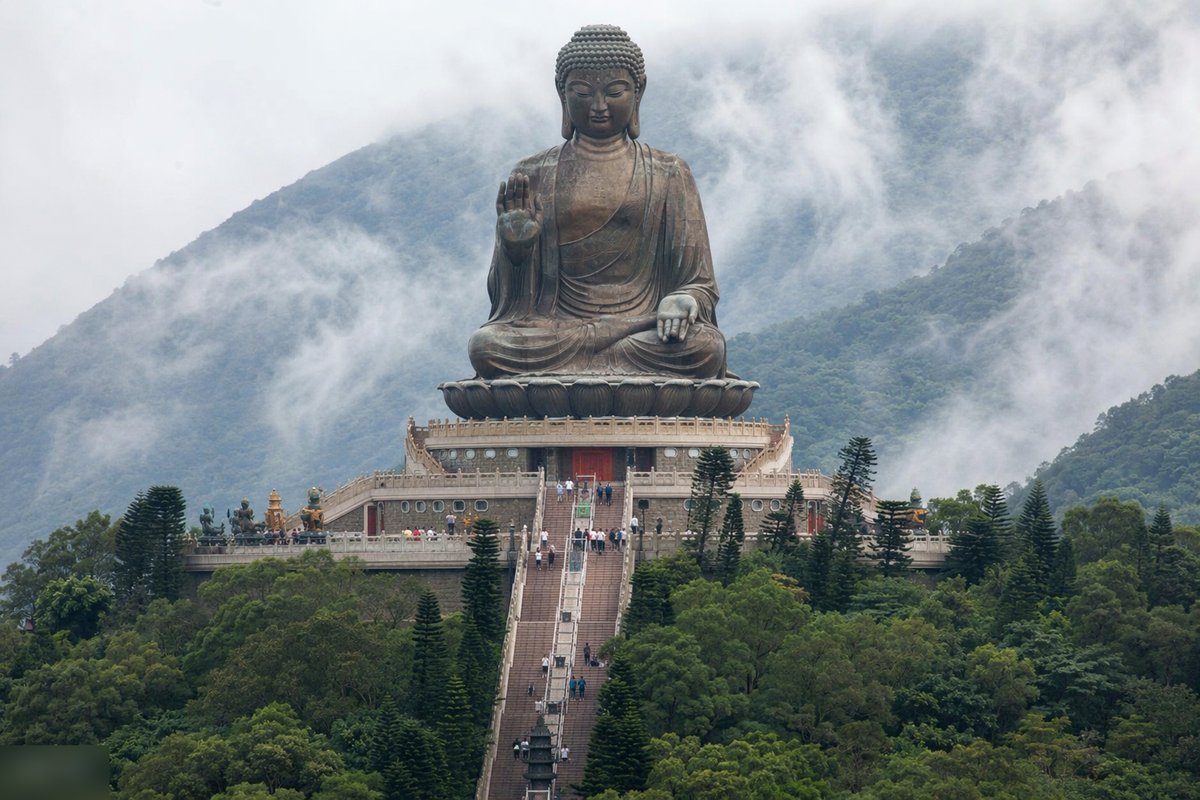
The monastery's famous neighbour, the Tian Tan Buddha, was completed in 1993, and its construction is a story in itself. Originally planned in concrete, engineers realised the statue would be too heavy for the mountaintop. So it was cast in bronze: 202 pieces in total. Most pieces were flown up by helicopter, but the massive face was considered too delicate for that journey. It travelled by truck and crane, a nerve-wracking three-day journey up the winding roads. Today the Buddha rises 34 metres above Ngong Ping, gazing north in quiet dignity.
Visitors climb 268 steps to reach him. Around the statue kneel six Devas, offering gifts that symbolise the six perfections of Buddhism: generosity, morality, patience, meditation, wisdom and diligence. A beautiful reminder that enlightenment is not a single act, but a path — walked step by step, like those 268 stairs.
The Three Sacred Halls
Inside the Buddha's base hides a spiritual complex of three halls that most tourists rush past: the Hall of Remembrance, housing a relic of Gautama Buddha gifted from Sri Lanka; the Hall of the Universe, celebrating the Buddha as a universal teacher; and the Hall of Benevolent Merit, honouring donors and devotees. Take ten minutes here — it's one of the quietest spots on the whole mountain.
Guardians, Kings and Ten Thousand Buddhas
In the monastery itself, the Four Heavenly Kings guard the Dharma, each with their own symbol — a sword, a pagoda, or even a musical instrument. At the entrance, the laughing Maitreya, Buddha of the future, welcomes you, while armoured Skanda stands guard opposite. And don't miss the Hall of Ten Thousand Buddhas, completed in 2014: five great Buddhas sit in majestic stillness: not five separate figures, but five aspects of enlightenment itself: truth, clarity, equality, compassion and perfection.
The Banyan Tree and a Well-Earned Snack
Outside the hall stands a mighty banyan tree. Its tangled aerial roots look like a whole forest, yet it is a single living organism. Locals build small shrines at its base for the earth gods. I always point it out to my guests: a fitting metaphor for Buddhist interconnectedness. And before we leave Lantau, one ritual is sacred to me as a guide: a stop at the monastery's vegetarian snack stall. Spirituality, after all, is also found in the joy of sharing food.
· Take the Ngong Ping 360 cable car up — book a Crystal Cabin if you want the glass floor — and the bus down for the best views both ways.
· Arrive before 10 am to beat the crowds at the 268 steps.
· Combine it with Tai O fishing village; buses run directly from Ngong Ping.
· The monastery's vegetarian lunch is simple, cheap and genuinely good.
Why I Love Guiding Here
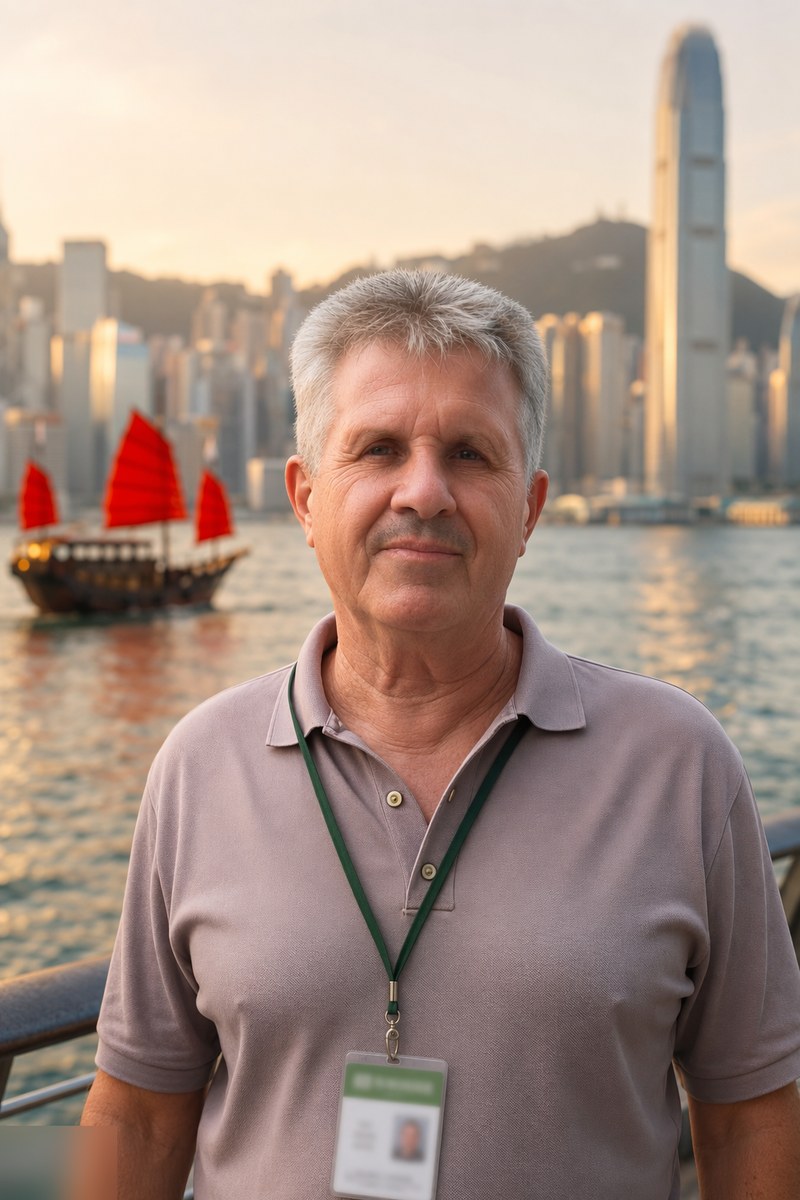
From the quiet origins of a straw hut to the grandeur of the Giant Buddha, from sacred halls to humble snacks — on Lantau, every step tells a story. If you'd like to hear them all in person, with plenty of time for photos and questions, just reach out. The mountain is waiting.