

Hong Kong Street Food: My Top 10 Snacks & Where to Find Them
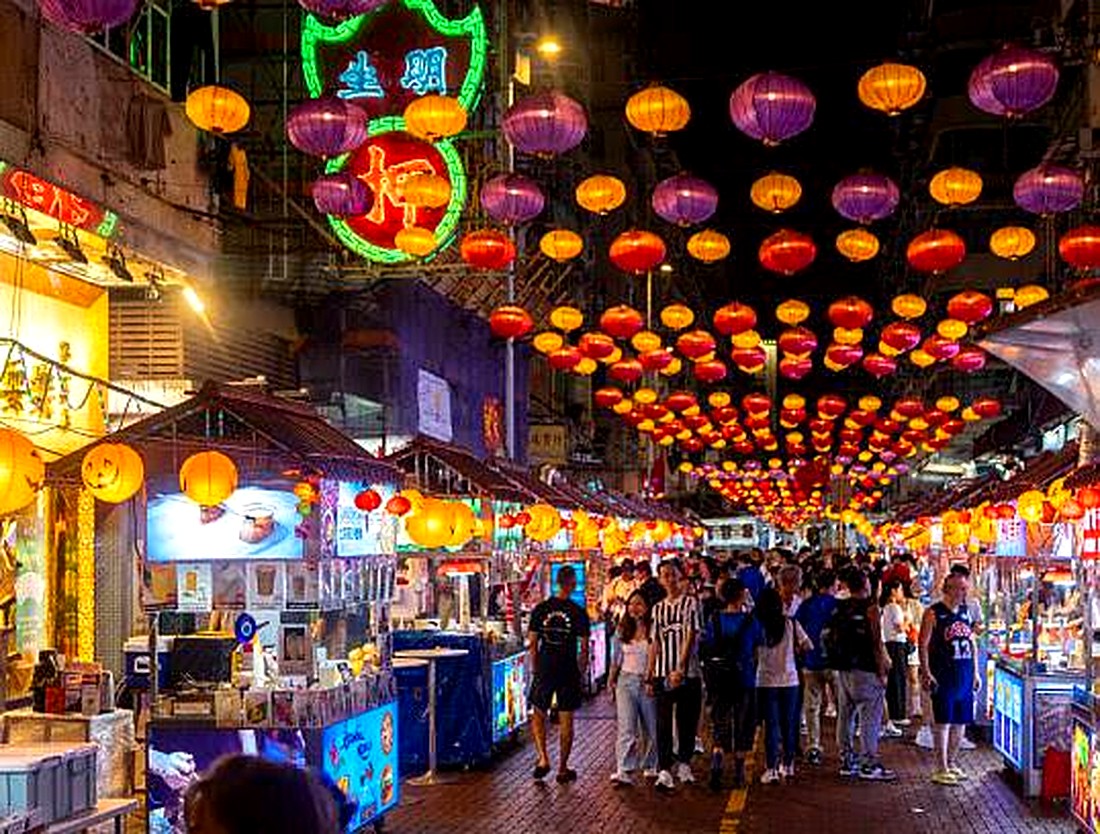
First things first — a word of warning, and a word of reassurance. Hong Kong street food is not what you may have experienced in Thailand, Vietnam or the Philippines, where at every corner someone on a bicycle or motorbike grills, carts and offers you food and drinks. Hong Kong used to be like that too. But nowadays — with food-safety regulations, proper refrigeration, clean running water and drainage for keeping utensils, and most importantly hands, clean — that era is over. This does not mean you cannot dive into our so-called street food or local snacks: Hong Kong street food does not have to hide behind any other country's. It is simply the cleaner, more hygienic version of it.
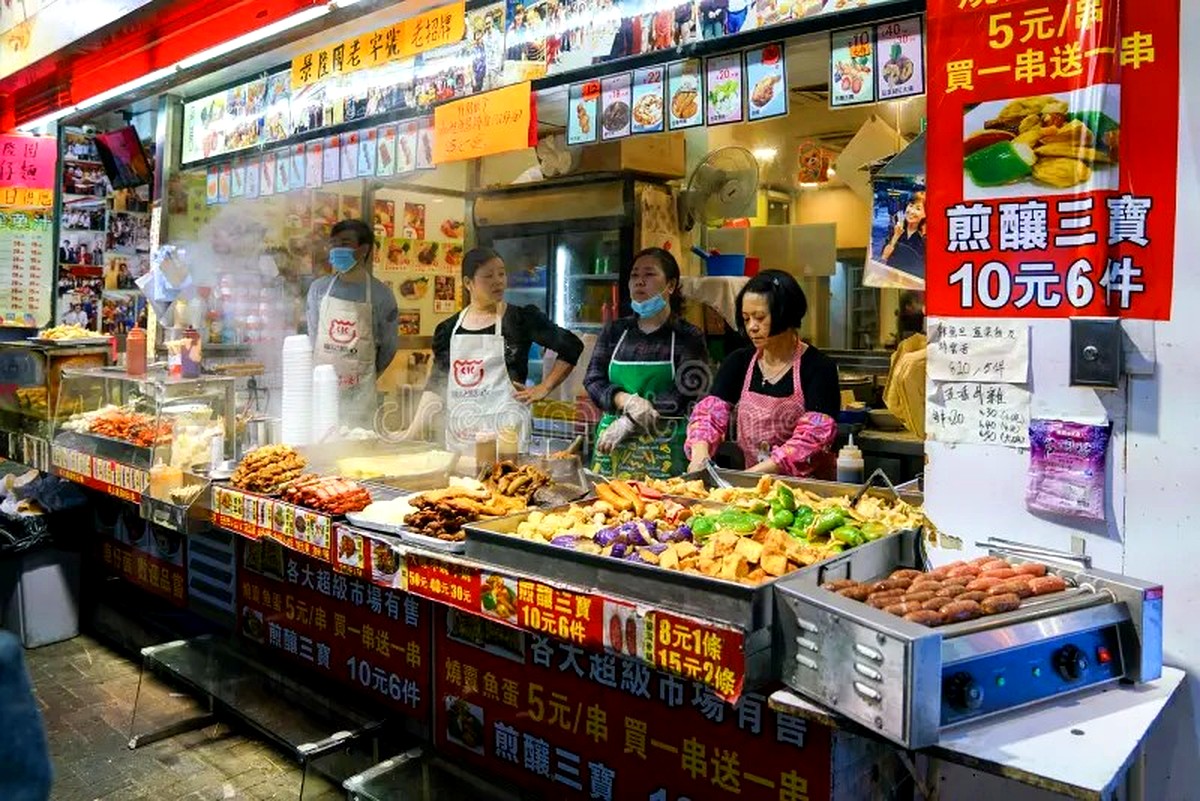
Every week a guest asks me the same question: "Hans, what should I actually eat on the street?" Fair enough. After 30 years in this city I have my personal top 10 — the snacks I learned to appreciate, some not on the first bite (a bit like sauerkraut or blue cheese, an acquired taste), but honestly, most Hong Kong snacks won me over at first bite. Stinky tofu and dried grilled seafood will NEVER EVER be among them. These are the snacks I grew up on as a Hongkonger and still eat every week. They are nobody's discovery: this is what the whole city eats, from taxi drivers to tycoons. And if we happen to walk past one of these street-food stalls, I always point them out — unless I've already figured out that my guests would rather eat back at the hotel or in the ship's restaurant. My guests are my kings, and after more than 300 tours I've learned to read them. They are in the best hands — just like a mother would do, ha ha ha.
Usually the portions are small, the prices are low, and the risk of a bad meal is tiny. If you eat any three of these ten, you are already half a Hongkonger.
1. Curry fish balls (咖喱魚蛋)
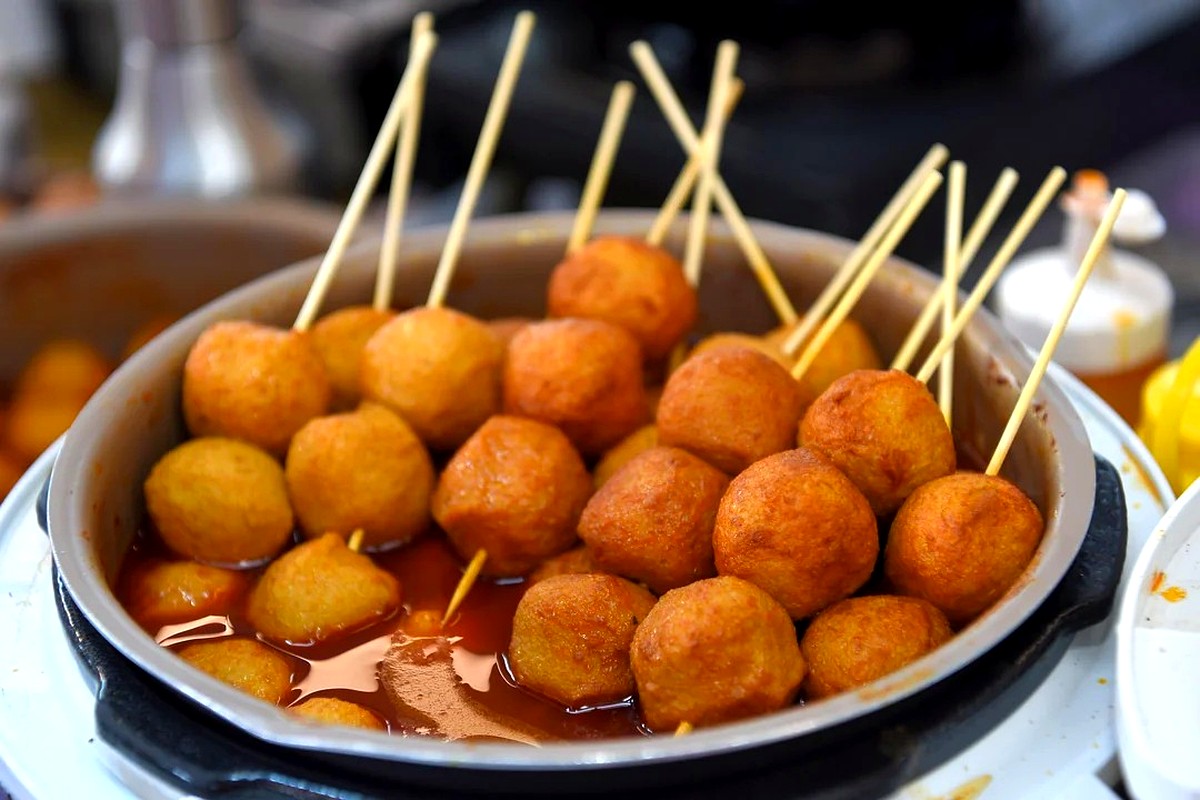
The undisputed number one. Springy fish-paste balls on a skewer, simmering in mild yellow curry sauce — born in the post-war fishing communities and never left. Every snack stall in Kowloon has them. Around HK$15–20. One warning I always give: some stalls keep a whole lineup of curries in increasing violence — the hottest genuinely hurts. Twice.
2. Egg waffles (雞蛋仔)
My personal favourite no. 1: Hong Kong's golden honeycomb — crisp outside, soft and slightly chewy inside. Invented in the 1950s by frugal shopkeepers using broken eggs. Plain is classic; modern stalls add chocolate, matcha, even ice cream. HK$17–28. If there's a queue, join it: fresh batter is everything.
3. Egg tarts
My personal favourite no. 2 — and a little piece of Hong Kong food history. In the early days there was only one egg tart in Hong Kong: served in the local cha chaan tengs and neighbourhood bakeries — shortcrust cookie-dough pastry, silky egg custard, still warm. That is the tart I grew up on.
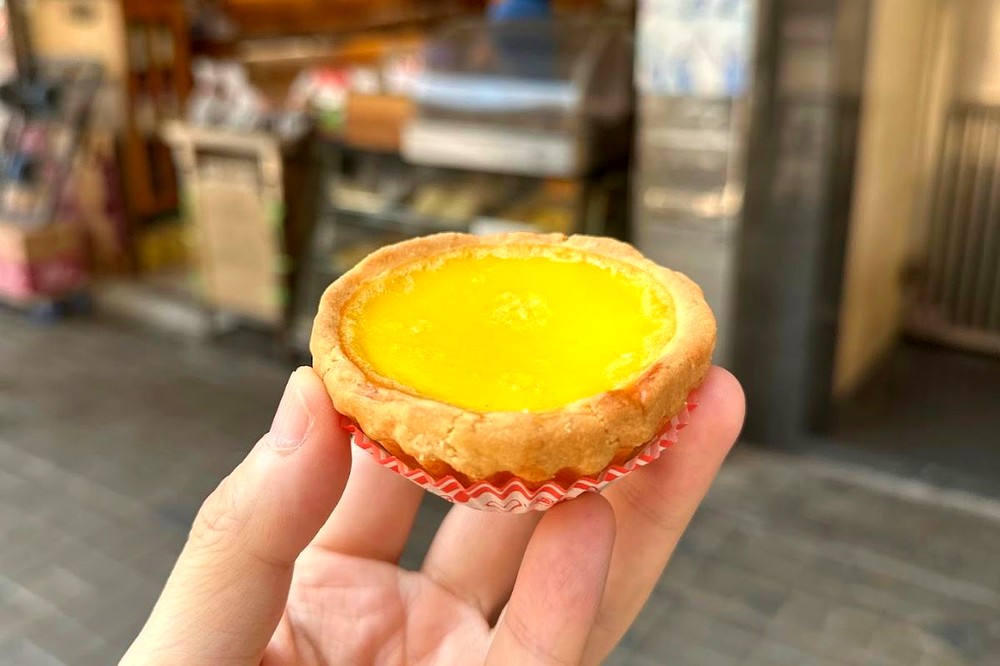
Then the Macanese-style egg tart moved over from Macau — which, of course, ultimately traces back to the Portuguese pastel de nata. Flaky puff pastry, caramelised top, a different animal entirely. (I am still pinning down the exact dates and the full story of how it crossed the harbour — one day I will write that one properly.)
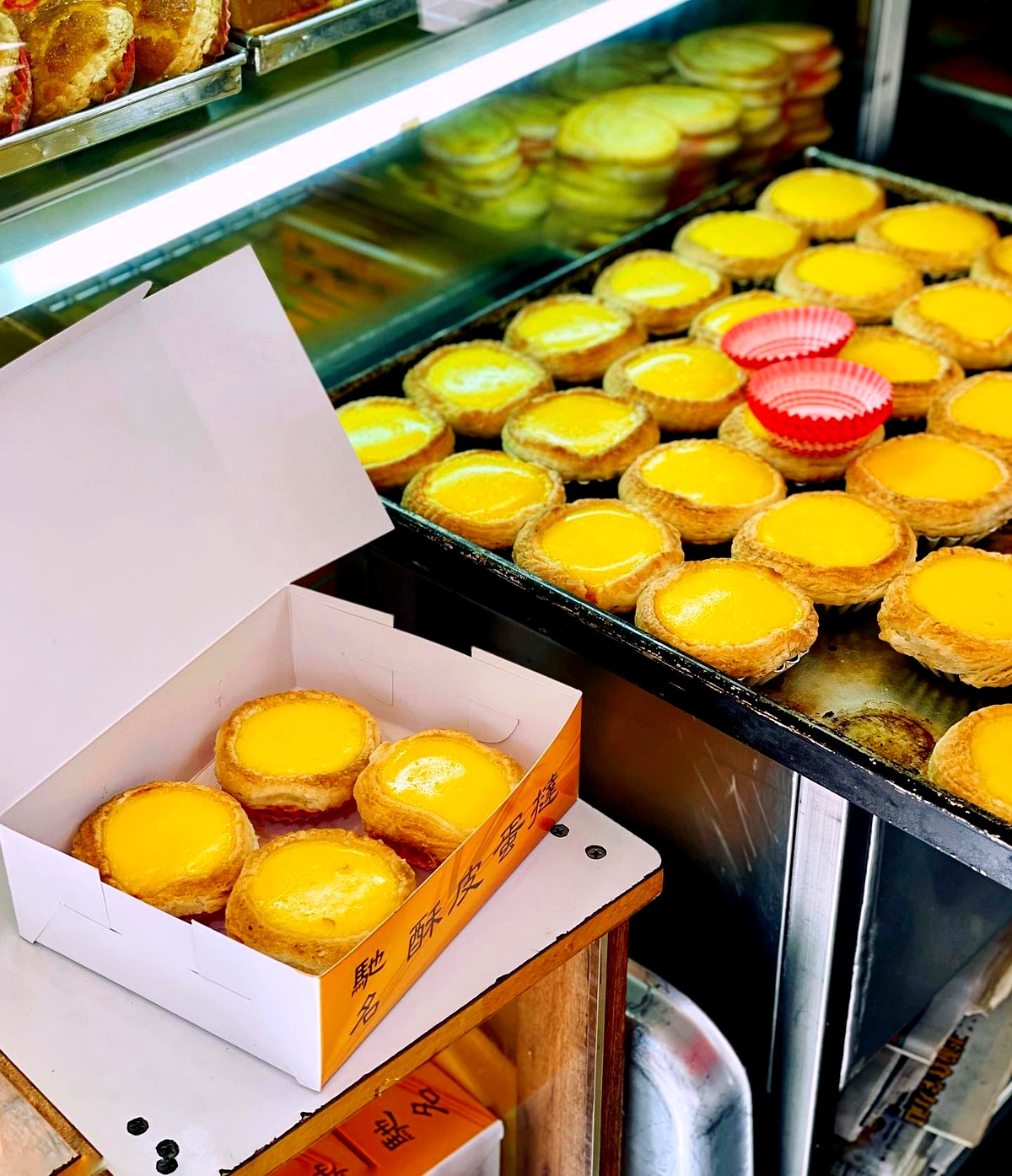
And now there is a new player in the market — actually a friend of mine, who opened Bakehouse. His sourdough egg tarts created a big buzz, and they are a real treat. If there were not mile-long queues most of the time, I would have them much more often. Thank God the other two local tarts are a very good place to start: on my tours I always give guests the chance to try both classics at my favourite Wan Chai bakery. And of course — if we pass a Bakehouse and the line is shorter, I will absolutely give it a chance.
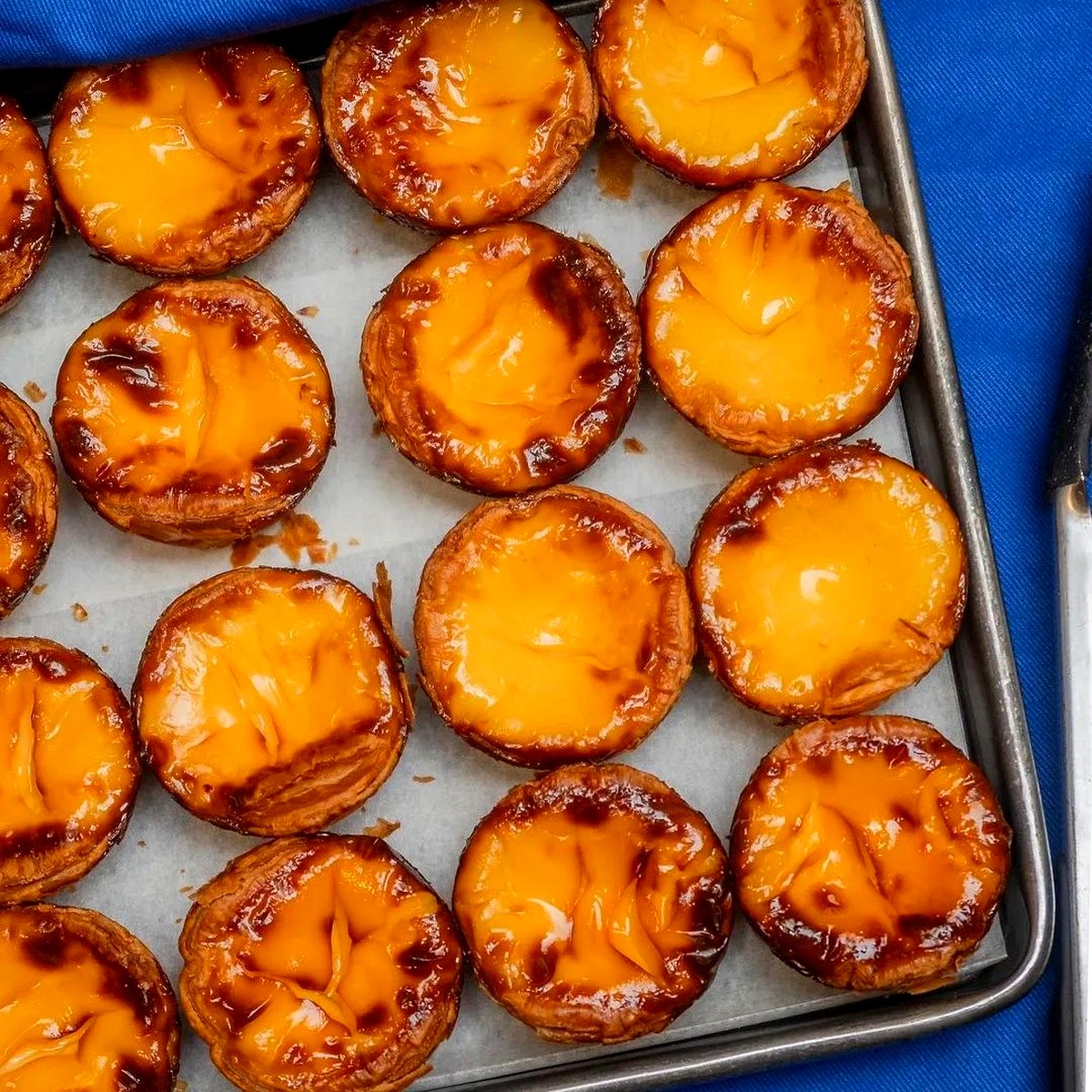
Prices: the classic bakery tart HK$8–15; the Macau-style and the Bakehouse sourdough run a few dollars more. All worth it.
4. Street-style siu mai
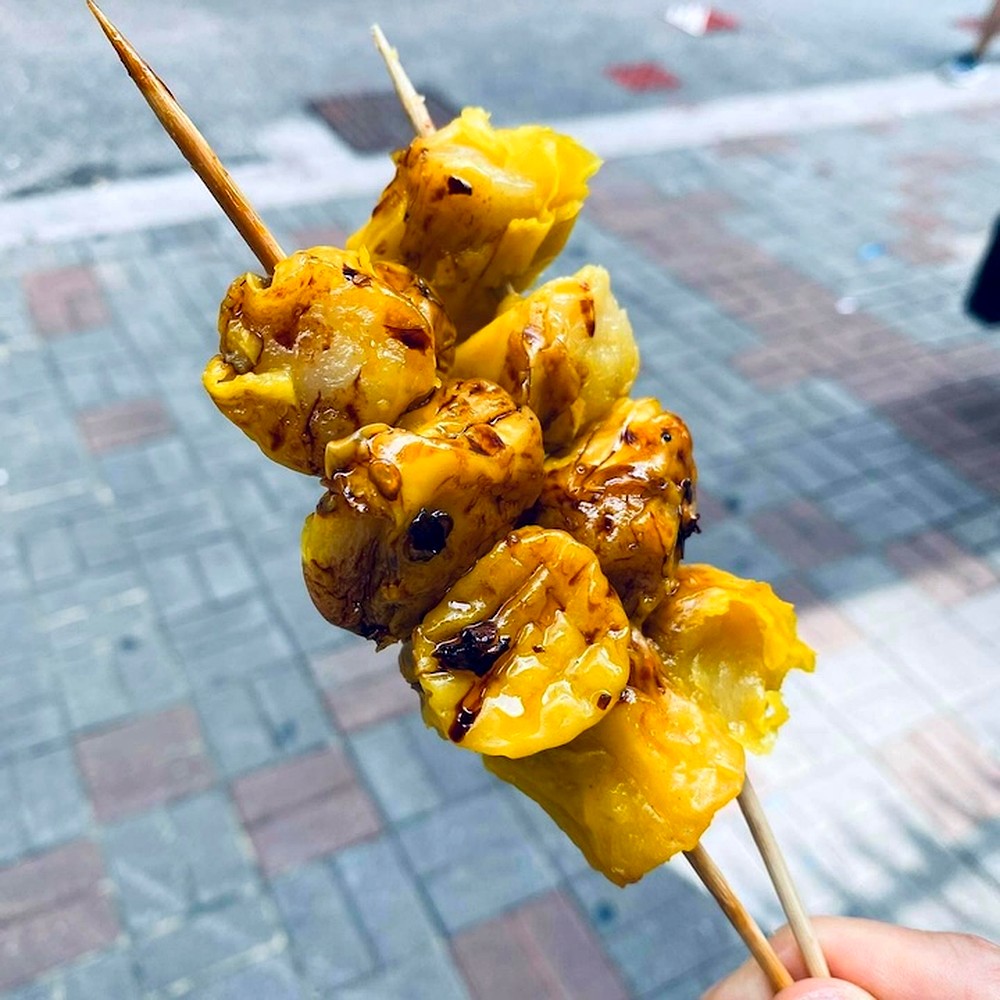
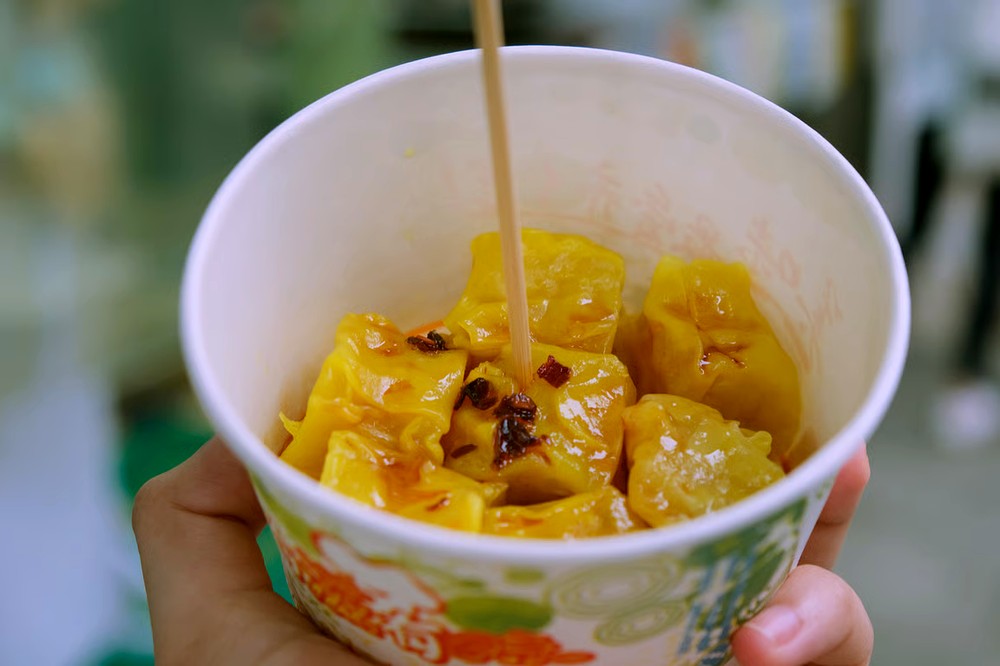
Not the delicate dim-sum version you probably know from Chinatown back home — if your only siu mai comes from a Chinatown run by owners who have never been to Hong Kong, the real thing will surprise you. These are yellow-skinned dumplings of pork and fish paste, five on a stick or in a cup with soy and chilli oil — the original Hong Kong fast food. HK$10–15. Fresh from the steamer beats anything sitting in a warmer: follow the steam, not the sign.
5. Cheung fun (腸粉)
My personal favourite no. 3 — I have them at least once a week on my way home to the island. The Thai lady at the stall knows I like mine extra spicy, and I always practise my Thai with her — which is about five times better than the little bit of Cantonese I can keep in my brain cells. Steamed rice noodle rolls, cut into pieces, slicked with sweet soy, sesame and a little (more for me) chilli. Soft, slippery, comforting. HK$10–15. Sham Shui Po and the back streets of Mong Kok do it best, often from carts that haven't moved in decades.
6. Stinky tofu (臭豆腐)
For the very brave — I warned you about this one at the top. If you really want to add something to your Chinese food bucket list that nothing else will ever match or challenge, here you go. You shouldn't get sick eating it, but I usually smell the stall 20–50 metres away, depending on wind direction — so the best I can do is hold your mobile phone and record your bravery (or stupidity — you decide) for posterity. Deep-fried fermented tofu with sweet sauce and chilli. You'll smell it before you see it — a fearsome aroma that clears a radius around the stall. Then you taste it: crunchy crust, custardy inside, surprisingly mild. HK$15–25. Every guest who braves it photographs the stall. Every single one.
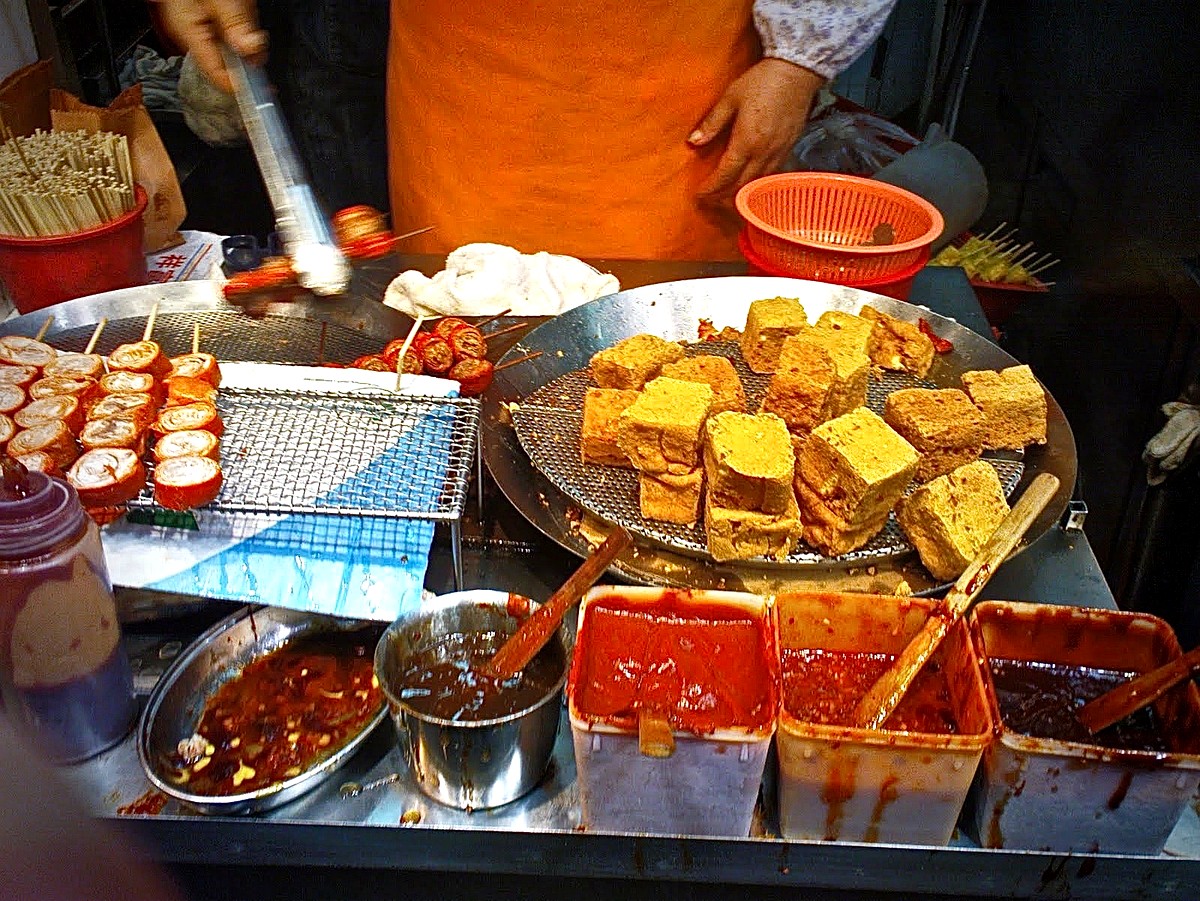
7. Three stuffed treasures (煎釀三寶)
Again: NOT for me — this one is for my Asian guests, who love it, especially those from the Philippines and Thailand. Fish paste stuffed into green pepper, aubergine and tofu, pan-fried until golden. Crispy outside, soft inside, dangerously moreish. HK$12–20. You'll see them sizzling at stalls all over Mong Kok and Kwun Tong — the theatre of the frying pan is half the fun.
8. Put chai ko (砵仔糕)
The old-school sweet: little steamed rice cakes in a porcelain bowl, chewy with red beans, brown sugar and nostalgia. HK$5–10. Fewer stalls sell them now — when you see one, buy two.
9. Claypot rice (煲仔飯)
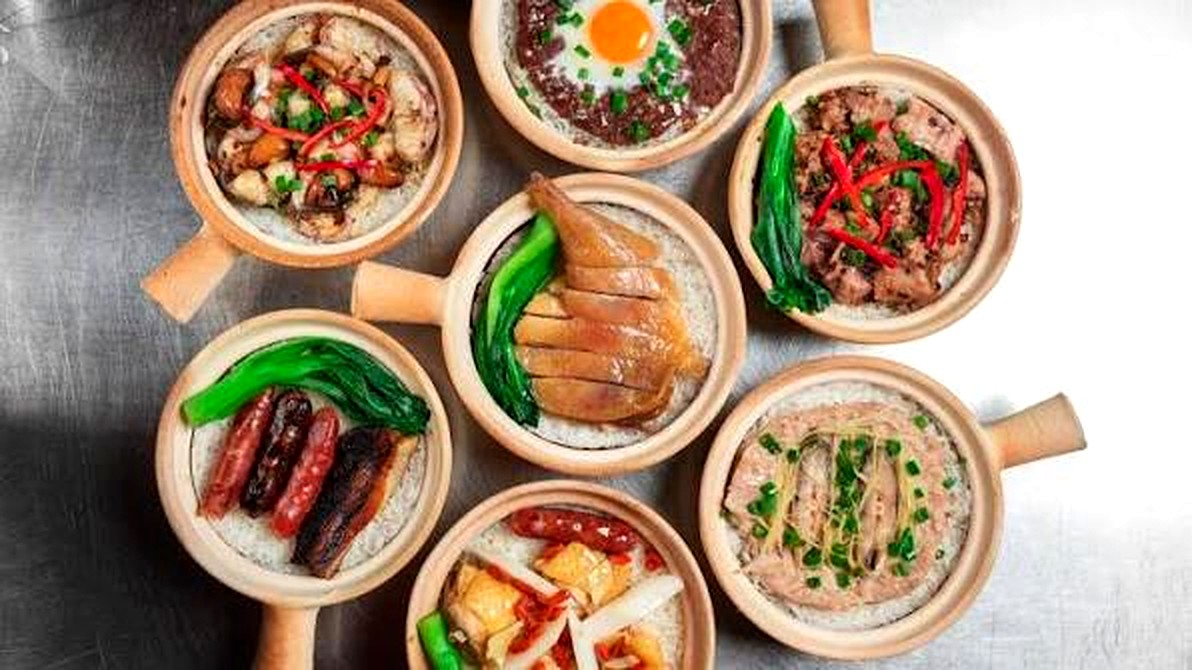
Not street food you walk with — street food you sit down for. Each clay pot is cooked to order over charcoal, and it takes time: count on 20–30 minutes from ordering to first spoon — which is exactly why you order it, chat, watch the street, and let it come. The toppings are a menu of their own: Chinese sausage (臘腸), cured pork belly (臘肉), chicken, spare ribs, minced beef with egg, salted fish, even eel — and the crust (飯焦) caramelised at the bottom of the pot is the prize everyone fights over. Temple Street at night is the classic setting. HK$60–90 — the priciest item here, and worth every dollar.
10. Tofu fa (豆腐花)
The gentle finish: warm silken tofu pudding with ginger syrup. HK$8–12. After a day of curry, chilli and charcoal, your stomach will thank you.
What else should you eat? Siu mei — the Cantonese barbecue window
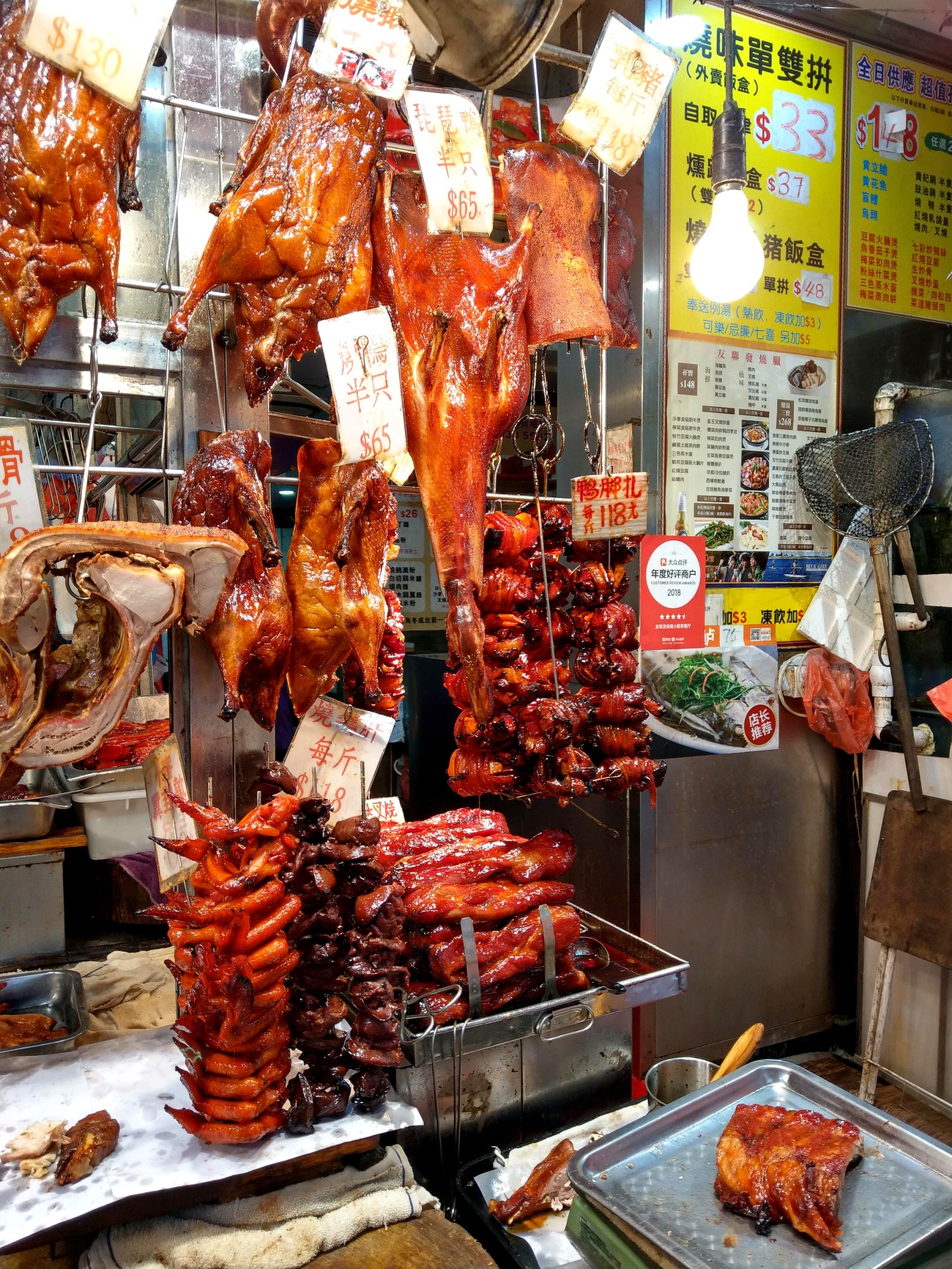
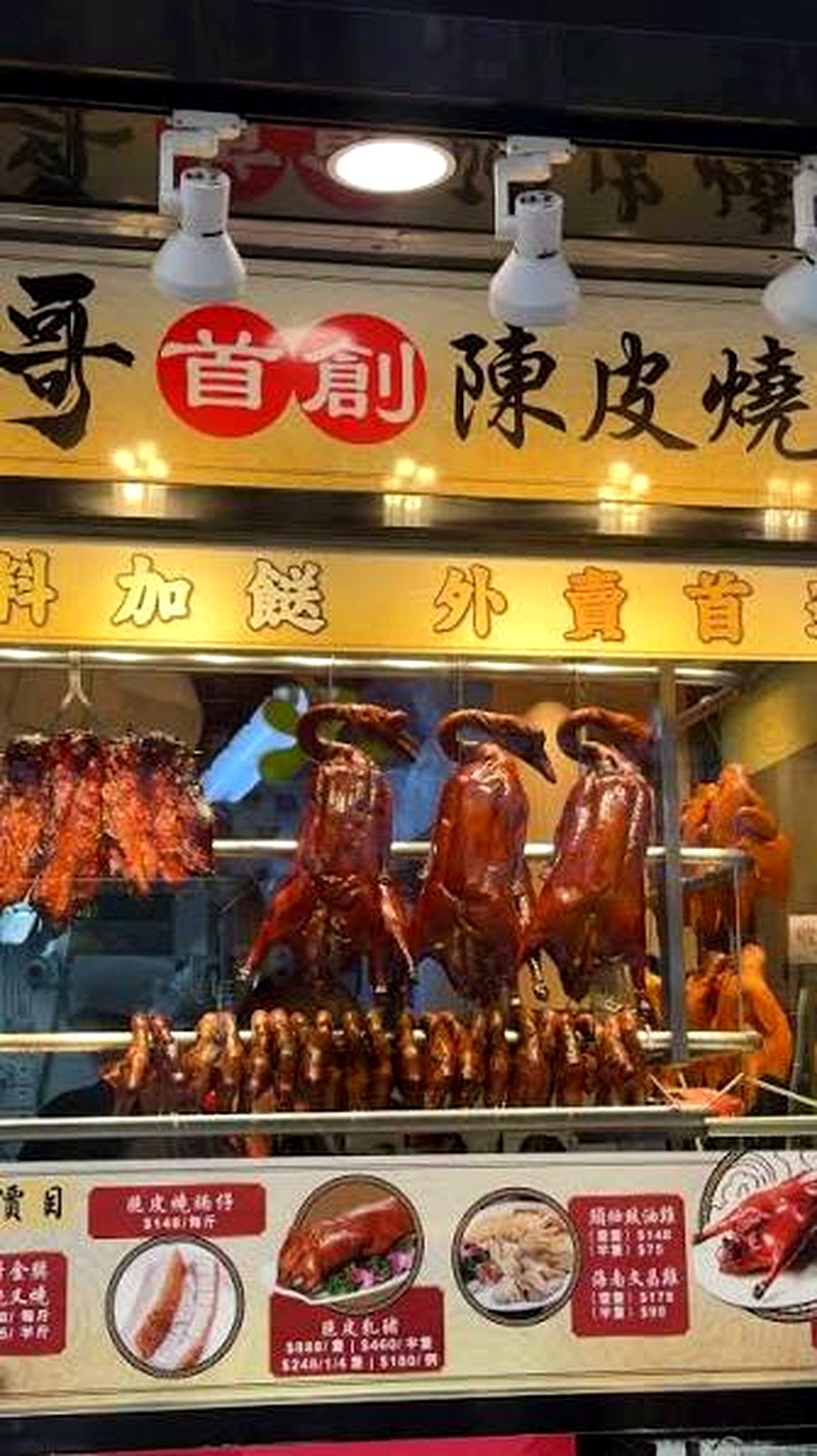
Of course our famous — and I mean genuinely famous — Cantonese barbecue, the siu mei shops with their golden birds hanging in the window. The ones to know:
- Char siu (叉燒) — sweet, charred barbecued pork with a caramelised edge. The gateway roast.
- Roast goose (燒鵝) — the undisputed king of the window. Rich, lacquered, worth every cent of the premium.
- Roast duck (燒鴨) — slightly leaner than the goose, crisp skin, plum sauce on the side.
- Soy-sauce chicken (油雞) — silky, fragrant, deceptively simple. The one locals judge a shop by.
- Crispy roast pork (燒肉) — crackling you can hear. Five layers: skin, fat, meat, fat, meat.
- Roast pigeon (乳鴿) — if you see it, order it. Gamey, juicy, gone in minutes.
But this is a sit-down meal, and it can cost anything from under HK$50 to HK$1,000 — depending on whether you sit on a plastic chair at a folding table with toilet paper as your napkin, or in a posh restaurant with wooden chairs, air-conditioning and waiters who are almost polite. Both are the same food. Only the chairs differ.
If you want the upmarket version with a first-timer-friendly smile: Madame Fu at Tai Kwun — the old Central Police Station compound, a sight in itself — does beautiful modern dim sum and Chinese barbecue, and it's where I send guests who want the special-occasion table without the tourist-menu treatment.

Accredited German-language guide (TIC) · in Hong Kong since 1994 · 25 years a Cheung Chau island resident. Every tour planned personally on WhatsApp — no call centre.
See it with your own private guide
All of these snacks can be part of any of my private tours — tailored to your pace, your interests, your language. Tell me beforehand which one you want to try and I will find the place that makes the best version of it — that is my job. I don’t run purely food tours — but it is close to impossible not to pass a street-food stall or shop during my tours, and we can either glide past gracefully or dive right in. If you want a dedicated food tour, I have a trusted licensed guide friend I can happily recommend.
Plan my tour →